How Top Flooring Pros Grow, Not Plateau: Findings from the Field
- 18 Apr, 2026
- Uncategorized
We analyzed the workflows, timelines, and outcomes reported by flooring retailers, commercial contractors, and stone fabricators who switched to digital estimating. Here's what the data shows about where time is lost, where profit is made, and what separates growing companies from stuck ones.
Key Numbers
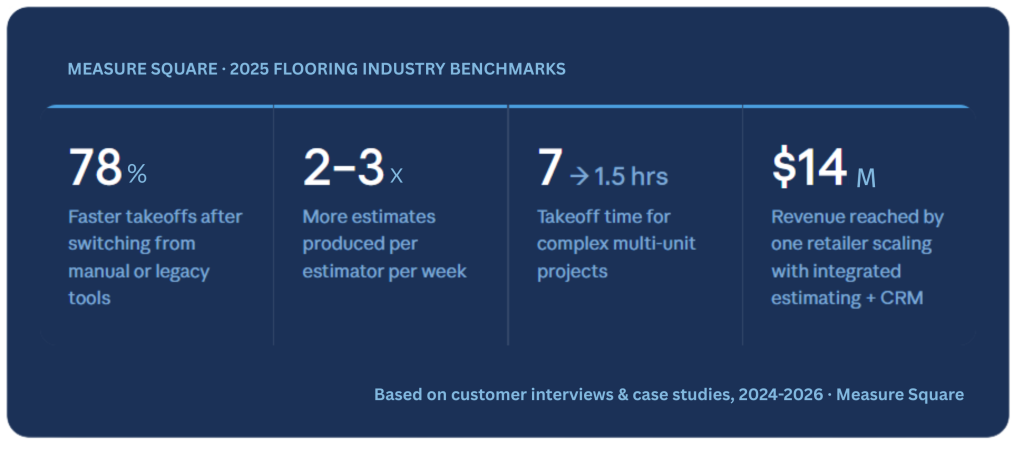
The Productivity Gap Is Wider Than Most Companies Realize
When we talk to flooring pros across retail, multifamily, commercial, and fabrication, the pattern is remarkably consistent: the biggest drag on profitability is not material cost or labor rates; it's the hidden hours buried in disconnected tools, manual re-entry, and estimation rework.
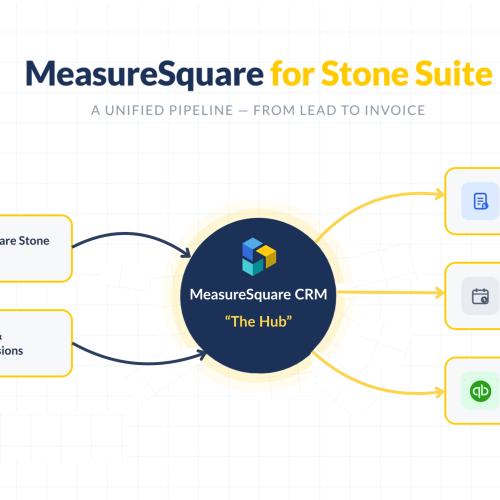
The typical pre-digital workflow involves three or more separate programs: one for measuring, one for drawing, one for pricing. Every handoff is a potential error. Every revision means starting over. And every estimator who leaves takes the process with them.
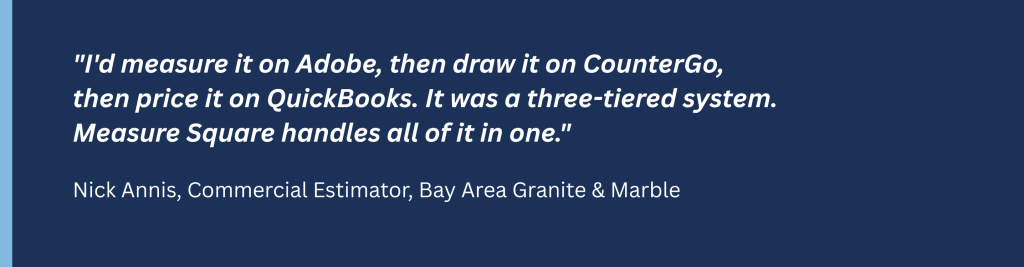
This is not an edge case. Across conversations with customers, from small residential retailers to multi-location commercial contractors, fragmented toolchains are the norm, not the exception.
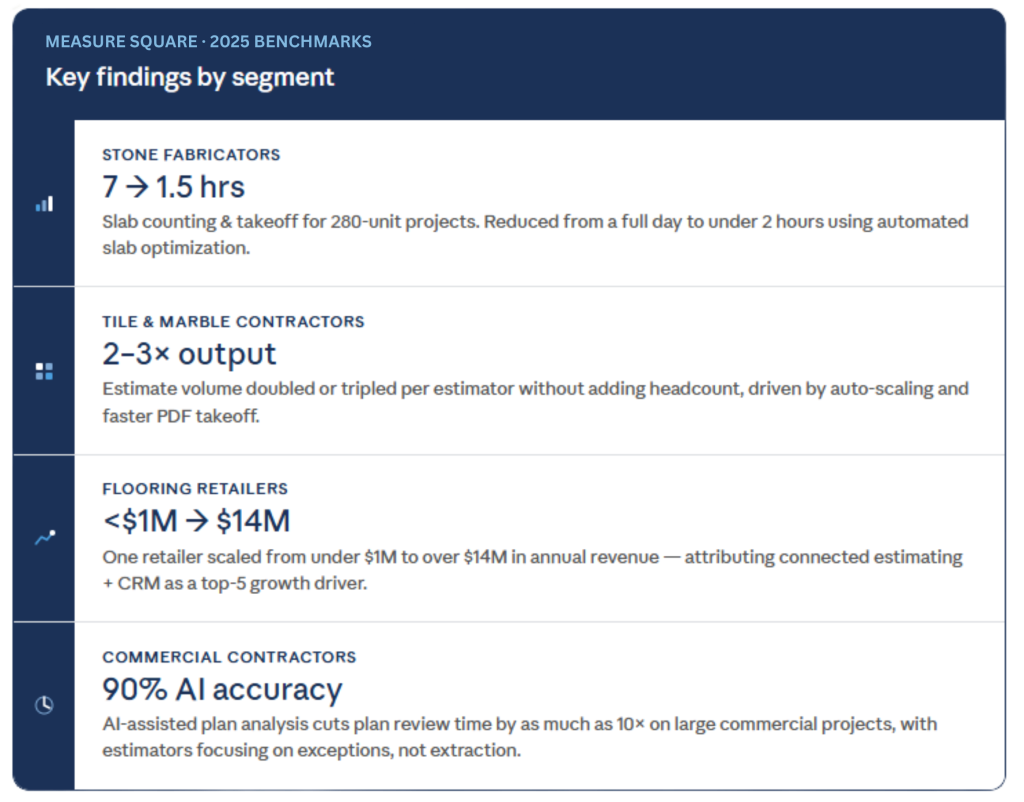
Finding 1: Manual slab counting is the single biggest time drain for fabricators
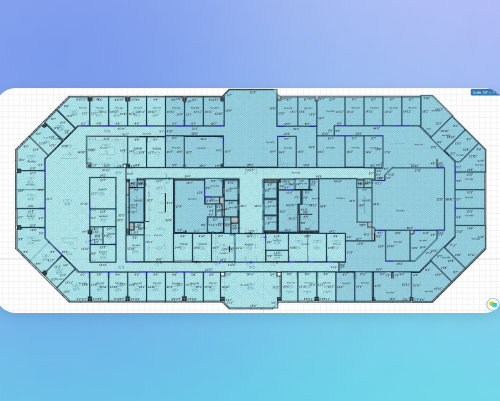
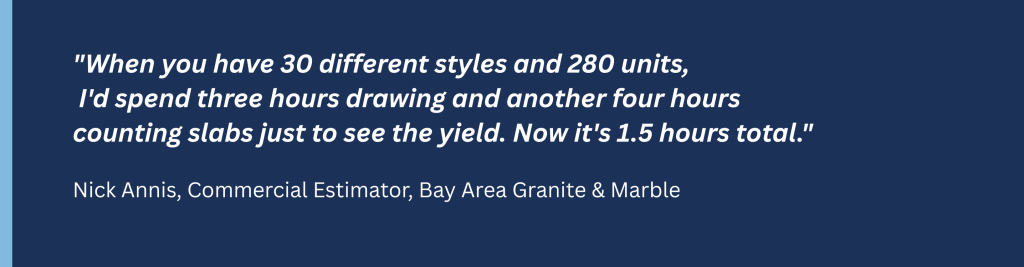
For stone fabricators working on large commercial projects, restaurants, apartment complexes, hotels, slab optimization used to be a hours-long manual exercise. Counting by hand, laying out unit plans one by one, trying to determine yield across dozens of material options: this is where entire afternoons disappeared.
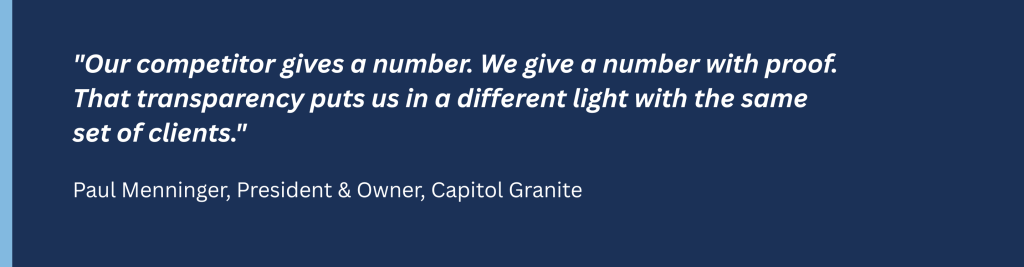
More critically, manual counting created downstream risk. When material was under-ordered or phases weren't tracked, the consequences showed up in the shop, not the estimate. Paul Menninger, President of Capitol Granite, described eating $5,000 to $10,000 on jobs where wall cladding was missed because it fell outside the normal countertop scope.

Finding 2: Shop drawings are the hidden differentiator in commercial bids
When we asked fabricators and tile contractors what feature changed their client relationships most, shop drawings came up again and again, not speed, not pricing accuracy, but the ability to put a visual proposal in front of a client.
Before digital shop drawings, miscommunication on scope was constant. Waterfall panels missed. Wall finishes overlooked. Change orders disputed. With auto-generated shop drawings attached to every quote, the ambiguity collapses.
Finding 3: Software fragmentation is a growth ceiling
The companies hitting revenue ceilings aren't the ones lacking sales talent or market opportunity. They're the ones running five or six disconnected tools and managing the gaps manually. Every lead that doesn't sync. Every estimate that has to be re-entered. Every installer who shows up without the right cut sheet.
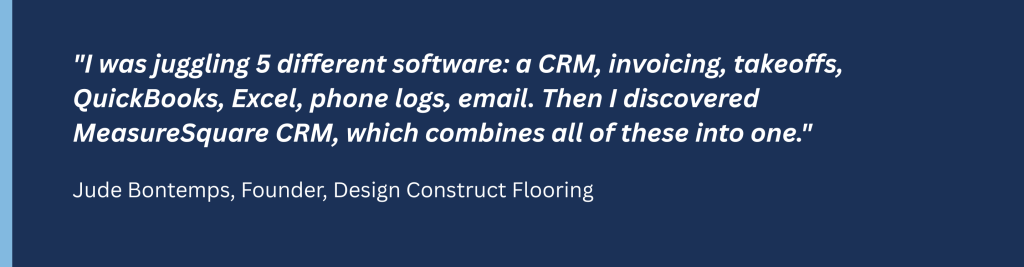
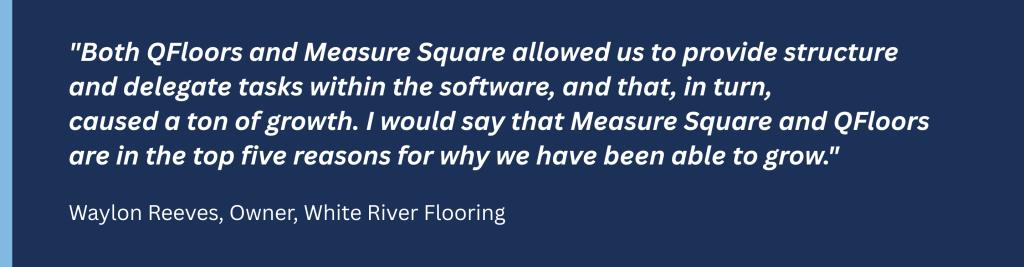
The shift to a connected platform isn't just an efficiency win, it's a structural one. Waylon Reeves of White River Flooring described MeasureSquare as being in his top five reasons for growth, alongside the structural clarity it brought to delegation and team accountability.
Finding 4: AI is compressing plan review from hours to minutes
On large commercial projects, plan review used to be a hidden labor sink. Estimators would spend hours flipping through specs, pulling finished schedules, identifying scopes for each room. For flooring companies taking on hospitality, multifamily, or retail projects, this could mean days of prep before a single number was calculated.

For newer estimators, this matters even more. Companies like Design Construct Flooring are using AI-assisted takeoff to flatten the onboarding curve, bringing new team members up to speed faster and removing the dependency on a single expert.

Finding 5: The best-run teams don't measure speed alone
One theme surfaced across almost every customer conversation, from retailers to fabricators: the companies that grow aren't optimizing purely for speed. They're optimizing for accuracy, consistency, and the ability to do it right the first time.
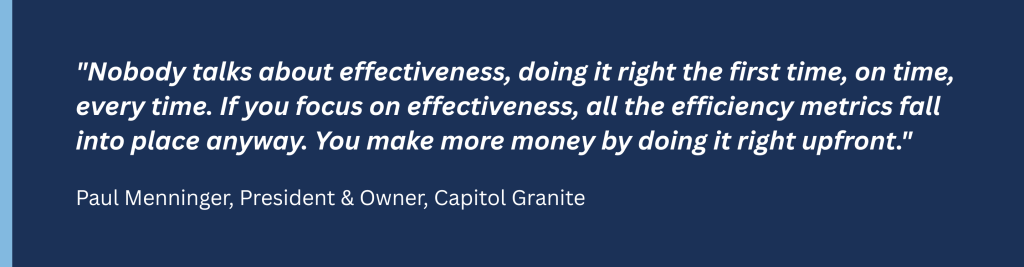
This is a meaningful distinction for flooring companies evaluating software. The question isn't just "will this make us faster?", it's "will this make us more reliable, more consistent, and less dependent on individual tribal knowledge?"
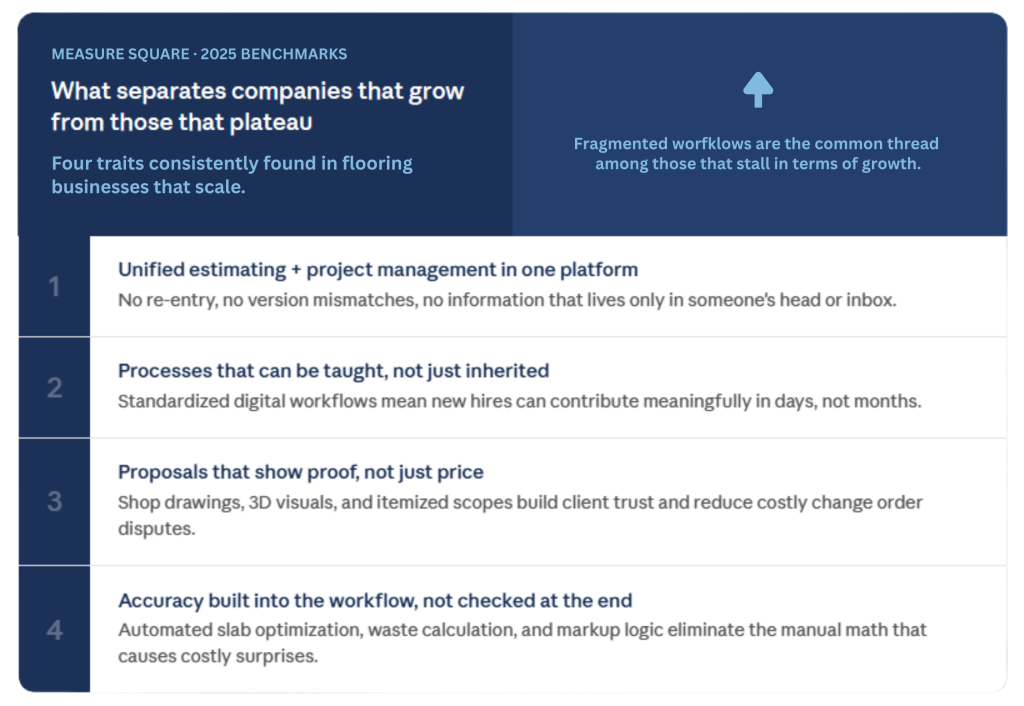
What separates companies that grow from those that plateau
See how your workflow compares
Measure Square works with flooring retailers, commercial contractors, installers, stone fabricators, and distributors. If you're still running multiple tools or spending hours on takeoffs that should take minutes, check out MeasureSquare CRM.
Start your free MeasureSquare CRM trial: begin here.
Findings are drawn from customer interviews, testimonials, and case studies collected by MeasureSquare across 2024 to 2026. Individual results vary by company size, project type, and prior workflow.