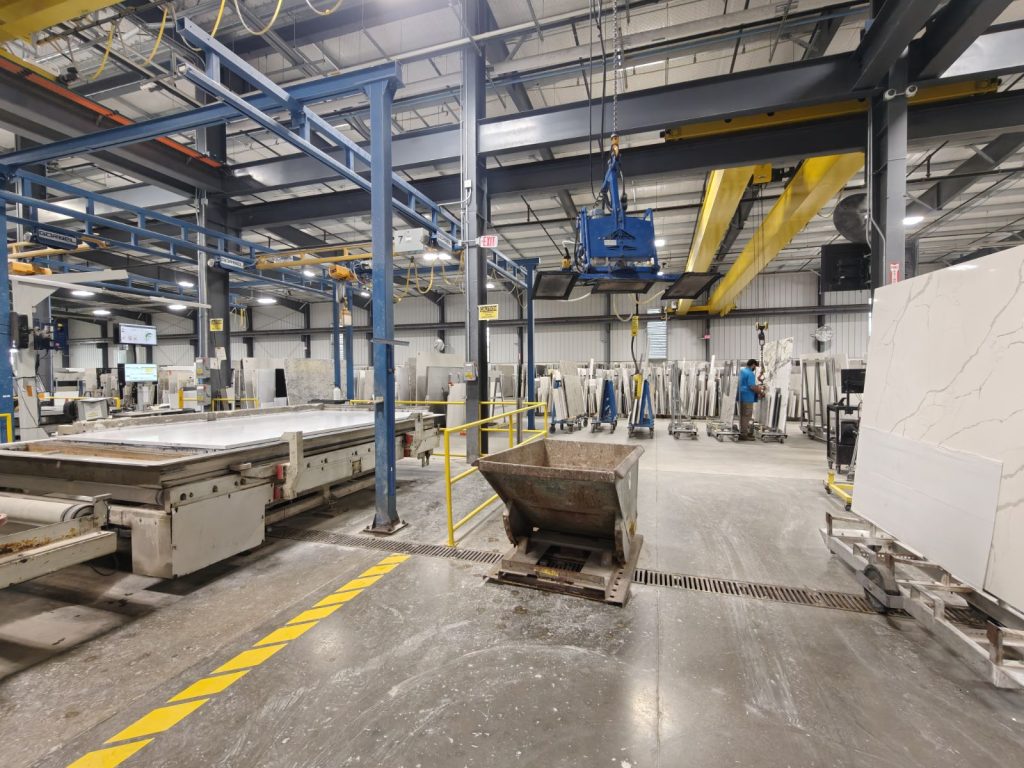
The Future of Stone Fabrication: Insights from Rockheads Summer Operations Event 2026
- 23 Jun, 2026
- Blanca Torii
- Stone & Tile, Stone Takeoff Estimating, Thought Leadership
Categories
Six pressures reshaping the industry and how leading shops are responding.
The stone industry is its own animal. It operates at the intersection of manufacturing, logistics, design, and installation, with workflows that are far more complex than most outsiders realize. Fabricators manage high-value materials, tight margins, specialized labor, evolving safety requirements, and increasingly demanding customer expectations, all while coordinating dozens of moving parts across every project.
The people who succeed in this industry know that complexity is part of the job. They also know the difference between a vendor who truly understands their world and one who is simply repackaging software built for someone else's.
"Stone guys carry a kind of patriotism about their trade. They know their industry is different, they know their needs follow suit, and they can smell a generic pitch from across the room," noted James Impallaria, CRM Solutions Manager for Measure Square.
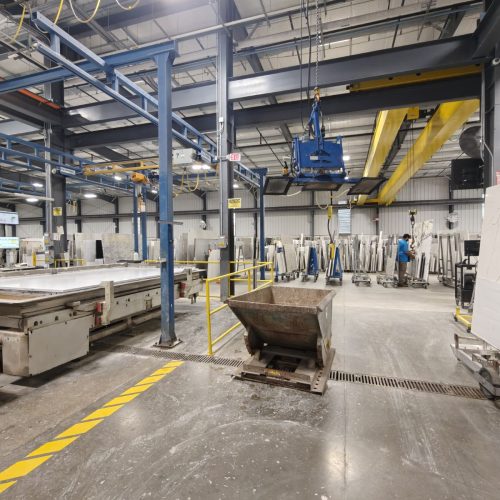
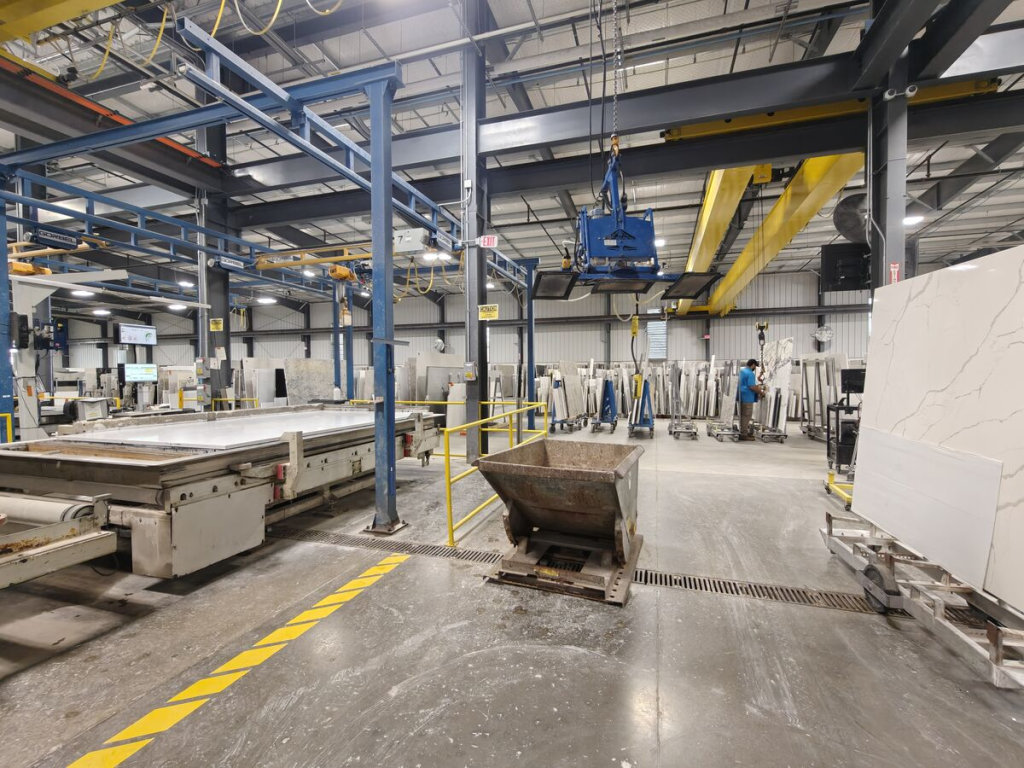
That reality was on full display at Rockheads Summer Operations Event 2026, hosted at Cutting Edge Countertops in Toledo, Ohio. Over two days of presentations, roundtable discussions, shop tours, and conversations with fabricators from across the country, one thing became clear: the industry is entering a period of significant change.
Labor shortages are tightening, compliance requirements are expanding, and AI is rapidly reshaping expectations. On top of that, consolidation is accelerating, and the software infrastructure supporting many shops is struggling to keep pace.
For fabricators, these pressures create challenges. They also create opportunity.
The shops that emerge strongest over the next several years will be the ones that build better systems, adopt technology thoughtfully, and create operational advantages that competitors cannot easily replicate.
Here are six forces shaping the future of stone fabrication right now.
Six Forces Reshaping Stone Fabrication Right Now
Every conversation at Rockheads, from the roundtables to the booth visits to the lunch-table debates, circled back to the same underlying pressures. Six of them kept surfacing:
Labor. Finding skilled fabricators is harder than it has ever been. The pipeline of trained stone workers is not keeping pace with demand, and shops are feeling it in lead times, quality variance, and the cost of retaining the people they have.
Silica. Regulatory pressure around crystalline silica dust exposure is intensifying. Engineered stone has become the flashpoint, but the compliance burden is spreading across the category. Shops that have not yet formalized their safety and exposure tracking are not just at legal risk, they are at operational risk. OSHA expertise is now a line item, not a luxury. Consultants in this space were among the most in-demand vendors at the event, commanding $10,000 to $60,000 per engagement.
AI and Technology. AI is the dominant conversation in stone fabrication right now. Every vendor is attaching the term to their product. Most fabricators are running their own experiments, from AI phone agents to quoting assistants and scheduling tools, with mixed results and no clear framework for evaluating what actually works. The industry is learning in real time, and there is no established authority yet.
Consolidation. The industry is compressing. Smaller shops are being absorbed. Larger operations are investing in equipment, systems, and infrastructure that smaller competitors cannot easily match. The shakeout many fabricators have anticipated for years is beginning to feel less like a future possibility and more like a present reality.
Margin Pressure. Revenue growth is not always translating into profit growth. Shops are winning more work and making less on it. As volume increases, complexity multiplies, margins shrink, and key employees face increasing pressure. Growth without operational discipline can become expensive very quickly.
Complexity. Stone fabrication sits at the intersection of manufacturing, logistics, design, and installation. Its workflow is inherently intricate: slab acquisition, inventory management, templating, cutting, edge profiling, quality inspection, scheduling, installation, and billing. Each step requires coordination. Most shops are managing that coordination across multiple disconnected systems that were never designed to work together.
These six forces do not operate independently; they compound. A labor shortage intensifies operational complexity. Margin pressure makes compliance costs harder to absorb. AI may help address many of these challenges, but only when it is deployed within strong systems and well-defined processes.
The Trap Most Shops Are Already In
One of the most direct observations shared at Rockheads came from Mark Phelps of Synchronous Solutions, a respected voice in stone shop operations:
"Good systems amplified by AI get better. Bad systems with AI do not inherently improve."
The room understood it immediately. The challenge is that many fabricators already know the problem; what they lack is a practical roadmap for solving it.
Across the industry, shops are running on a patchwork of software built for adjacent markets, filling the gaps with spreadsheets, manual processes, and institutional knowledge. As project volume grows, those gaps become harder to manage. The fabricators who have recognized this most clearly are increasingly building their own custom workflows with large language models, not because they want to become software developers, but because they have struggled to find tools that truly fit the realities of stone fabrication.
There was also a story shared during the event that perfectly illustrated the industry's current relationship with AI. One shop implemented an AI phone agent that successfully handled 92% of inbound calls. Instead of viewing that as a significant operational win, the team focused entirely on the remaining 8% of failures. Confidence in the system disappeared, and a manual review process was added to double-check every interaction, eliminating much of the efficiency gain.
The lesson is not that AI fails fabricators. It is that successful AI adoption requires clear expectations, trust, and a thoughtful implementation strategy. Right now, many shops are navigating that journey alone.
Where Measure Square Fits
Stone fabricators have heard promises before. They have seen vendors arrive claiming to solve every problem in the shop, only to disappear a few years later. What earns trust in this industry is not broad claims; it's specificity, credibility, and a genuine understanding of the work.
With that in mind, it is worth looking at where Measure Square is creating value for stone fabricators today and why those capabilities resonated so strongly throughout the conversations at Rockheads.
Stone Takeoff Is the Foundation
Stone takeoff remains Measure Square's strongest differentiator in this market.
Measure Square takeoff and nesting capabilities are built for the realities of stone fabrication: complex layouts, irregular shapes, expensive materials, commercial-scale projects, and the constant need to maximize slab yield.
That value proposition was reinforced by data shared directly from Cutting Edge Countertops. According to the company, a 1% increase in average slab yield saves roughly $13,000. The statistic resonated because it came from a fabricator measuring real-world outcomes, not a software company making projections.
For shops managing high material costs and increasingly tight margins, even small efficiency gains can have an outsized impact. MeasureSquare Stone & Tile takeoff/estimating platform is designed to help create those gains.
Bringing Order to the Front End of the Workflow
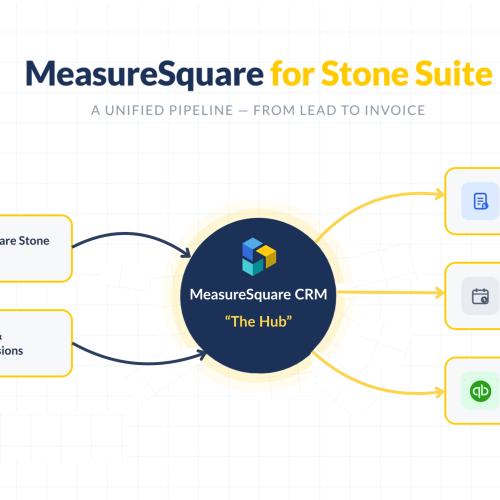
MeasureSquare CRM, one of the only takeoff-centered CRMs, extends that value beyond estimating by bringing organization and visibility to the customer and project lifecycle.
Pipeline tracking, contact management, bid documentation, communication history, follow-ups, and project records all live in one place, helping teams reduce administrative friction and stay aligned as projects move forward.
For shops still relying on spreadsheets, disconnected tools, or generic business software, that visibility can make a meaningful difference in how work gets managed from first conversation to final invoice.
Where Measure Square Is Headed
One theme surfaced repeatedly at Rockheads: fabricators are looking for technology that understands the realities of their business.
The opportunity is not simply to add more software, it's to create a connected ecosystem that helps shops work more efficiently, make better decisions, and navigate increasing operational complexity with confidence.
Measure Square is uniquely positioned to help move that vision forward. The company already serves the trades with industry-leading takeoff and estimating tools, a growing CRM platform, and a foundation designed to connect critical workflows rather than isolate them.
Just as important, Measure Square is investing heavily in AI. While much of the industry's AI conversation remains focused on experimentation, the real opportunity lies in practical applications that help fabricators save time, reduce manual work, improve accuracy, and surface insights that would otherwise remain buried in disconnected systems.
Rockheads reinforced that the future of stone fabrication will be shaped by a combination of technology, expertise, and strong industry partnerships. The companies that bring those elements together will help define the next generation of operational excellence in the trade.
For Measure Square, that means continuing to build solutions that support how stone fabricators actually work while exploring new ways AI, automation, and connected workflows can help shops operate more efficiently and scale more profitably.
The Bottom Line
The stone industry is under pressure from multiple directions at once, and the shops that emerge stronger will be the ones that treat systems and technology as competitive advantages rather than overhead expenses.
That means adopting AI within strong operational frameworks, not layering it onto broken processes. It means formalizing workflows before growth exposes inefficiencies, and it means investing in tools that help teams work smarter, communicate more effectively, and maintain visibility across increasingly complex projects.
Measure Square's role in stone fabrication begins with industry-leading takeoff and estimating. It extends through tools that help fabricators bring greater visibility and control to their workflows. And it continues through ongoing investment in AI, automation, and connected systems designed specifically for the realities of the trades.
Measure Square has spent more than two decades serving contractors and specialty trades. The conversations at Rockheads were not just a snapshot of where the industry is today. They were a preview of where it is headed, and they will help shape what comes next.
Measure Square offers purpose-built takeoff, estimating, and CRM software for stone, flooring, and commercial trade contractors. Learn more about MeasureSquare Stone at measuresquare.com.